As a carbon molecular sieve (CMS) supplier, one of the most common questions we get from industrial clients is how our products hold up in environments with alkaline gases. It’s a critical concern because many gas separation applications—from biogas upgrading to ammonia production—expose CMS directly to gases like ammonia (NH₃), hydrogen sulfide (H₂S), and even small concentrations of sodium hydroxide (NaOH) fumes in some process streams. Early on, I’ve seen firsthand how misjudging this compatibility can lead to costly performance drops, and I want to share what we’ve learned over years of testing and real-world client deployments. Carbon Molecular Sieve
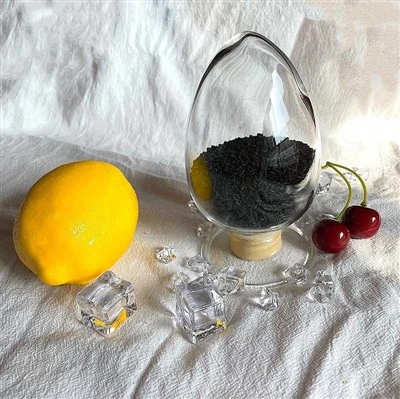
First, let’s ground this in what CMS is at its core. Unlike zeolites, which are crystalline aluminosilicates, CMS are amorphous carbon materials made from controlled pyrolysis of organic precursors like coconut shells, coal, or polymer resins. Their pore structure is a tight network of uniform micro and ultramicropores—this is what lets them separate gas molecules by size, which is why they’re used for things like nitrogen generation from air or CO₂ capture from natural gas. That porous structure is both their biggest strength and their biggest vulnerability when exposed to alkaline gases, because alkaline components can alter the surface and pore structure in ways that kill their separation ability.
Let’s start with the most common alkaline gas our clients ask about: ammonia. Ammonia is present in so many industrial streams: fertilizer production emissions, biogas from manure digestion, even wastewater treatment off-gases. Early tests we ran in our lab a decade ago, before we refined our CMS formulations, showed something that confused us at first: when we exposed standard CMS to 1,000 ppm of ammonia at 40°C, their nitrogen productivity dropped by 18% after just 100 hours. At first we thought it was simple pore blocking, but when we looked at the pore size distribution with gas adsorption testing, we saw something different—the average pore width had expanded by 0.2 nanometers. That’s a big deal, because CMS rely on pores being just the right size: for nitrogen generation, pores around 0.33 nm work best to let oxygen (0.346 nm) pass through while trapping nitrogen (0.364 nm). Expand those pores even a little, and you lose the molecular sieving effect.
Why does ammonia do that? Ammonia is a polar molecule, and it’s also a weak base. It interacts with the oxygen-containing functional groups that are naturally present on CMS surfaces—groups like carboxyl, hydroxyl, and carbonyl. Those groups are what make CMS adsorb polar gases, but ammonia reacts with some of them. It can protonate the surface groups, or even break weak carbon bonds in the pore walls to create larger pores. The really tricky part is that this isn’t just physical adsorption; it’s a chemical interaction, so it’s not easy to reverse with simple heating like you can do with a hydrocarbon contaminant. We tried thermal regeneration at 180°C, which usually brings CMS back to 90% of original performance, but after ammonia exposure, it only got us to 65%. That’s a problem for clients who need cyclical regeneration—if your CMS can’t be regenerated, you’re replacing it every few months, not every few years.
Then there’s hydrogen sulfide, which is another alkaline-adjacent gas? Wait, no, H₂S is acidic, but it’s often found alongside alkaline gases like ammonia in biogas, so it’s a common co-contaminant. But our clients do run into true alkaline environments too, like when they process streams with caustic scrubber off-gases, which have small amounts of NaOH mist or fumes. We tested that a couple years ago for a food processing client who was using CMS to recover CO₂ from their anaerobic digestion unit, but their upstream caustic scrubber wasn’t capturing all the small NaOH particles. When those particles hit CMS, they deposit on the pore walls. It’s not a reaction in the same way as ammonia, but the NaOH particles are tiny enough to clog the ultramicropores that are critical for separation. In that case, the productivity dropped 25% in 80 hours, and regeneration didn’t help because the NaOH was fused to the carbon surface at process temperatures.
But here’s the good news: not all CMS are the same, and we’ve spent years engineering formulations to resist these alkaline effects. Early on, we thought all CMS would behave similarly, but we soon realized that precursor choice and surface treatment make a huge difference. For example, our coconut-shell-based CMS, which we originally made for natural gas dehydration, held up okay to low levels of ammonia, but our clients processing fertilizer off-gases needed something more robust. So we started developing a modified CMS with a lower density of surface oxygen groups. How? We did a post-pyrolysis treatment with nitrogen gas at 900°C, which strips away most of the carboxyl and hydroxyl groups that react with ammonia. That cut the ammonia-induced pore expansion by 70%—we tested it with 5,000 ppm of ammonia at 60°C, and after 500 hours, the pore size only expanded 0.06 nm, and productivity dropped by less than 5%. That’s a number that makes our engineering team happy, because it means clients don’t have to replace their CMS every six months.
We also learned about operating conditions that can minimize alkaline gas damage. It’s not just about the CMS itself—it’s about how our clients run their systems. For example, if you can keep the moisture content in your gas stream below 10% relative humidity, ammonia’s ability to react with CMS surface groups drops sharply. Ammonia reacts faster with wet surfaces because water helps it dissociate into ammonium ions, which are much more reactive with carbon surfaces. We’ve had a biogas client who switched their feed to a 5% RH stream instead of 15%, and their CMS life went from 12 months to 36 months. That’s a huge difference in operational cost. Another trick is to add a simple guard bed upstream of the CMS unit, made of activated carbon impregnated with a weak acid like citric acid. That guard bed will capture most of the ammonia before it ever hits the CMS, so the CMS itself stays clean. We don’t sell those guard beds, but we recommend them all the time because it’s a low-cost fix that extends CMS life dramatically.
Of course, there are limits. We can’t make CMS completely immune to high concentrations of alkaline gases. If you have a stream with 10,000 ppm of ammonia and run it at 80°C with 50% RH, even our modified CMS will degrade over time. We did a test of that scenario last year, and after 1,000 hours, the productivity dropped by 30%—which is still better than standard CMS, which would have dropped by 60% in the same time, but it’s not a permanent solution. For those high-concentration applications, we recommend alternative technologies like membrane separation, or a combination of CMS and a zeolite bed that’s more resistant to high ammonia levels. We’re always honest with clients about that, because we’d rather not sell a product that won’t perform for them.
One of the most interesting case studies we worked on was a client in the nitrogen generation industry who was using CMS to make on-site nitrogen for food packaging. They were running it in a warehouse that had occasional ammonia leaks from a nearby cold storage unit—small, 200 ppm bursts, a few times a month. At first, their standard CMS was failing after 4 months, because each ammonia burst was slowly adding up. We supplied them with our high-stability CMS and suggested they add a small activated carbon guard bed near the CMS inlet. A year later, they called us to say their CMS was still working perfectly, and they had even cut their maintenance costs by 40%. That’s the kind of result that makes all the testing worth it.
I also want to address a common misconception: some people think that because carbon is non-polar, it doesn’t react with alkaline gases. But that’s only true for very inert carbons. Our CMS has a lot of surface functionality, which is a byproduct of how we manufacture it. The right amount of functionality is good because it helps with adsorption of polar gases like CO₂, but too much makes it vulnerable to ammonia. That’s why formulation is such a balance—we’re not just making a pore structure, we’re tuning the surface chemistry to be selective without being reactive.
Another point: when CMS is exposed to alkaline gases, it’s not just about ammonia. We’ve seen cases where streams with methylamine, which is another alkaline gas used in pharmaceutical manufacturing, had a similar effect. Methylamine is larger than ammonia, so it’s less likely to block pores directly, but its reactivity with surface groups still leads to pore expansion. Our modified CMS handles that too, because we’ve targeted the reactive surface groups regardless of the specific alkaline gas.
What about long-term performance? A lot of clients worry that even if their CMS works for a few hundred hours, it will degrade over years. We have a client who’s been using our high-stability CMS for ammonia removal from fertilizer off-gases for 5 years now. They do a performance test every 6 months, and the productivity is still at 92% of original, which is exactly what we projected. That’s because our surface treatment doesn’t break down over time—it’s a permanent modification that happens during manufacturing, not a coating that can wash off or peel.
I should also mention regeneration, because that’s a big part of industrial CMS use. Most CMS systems are pressure-swing adsorption (PSA) units, where you pressurize the feed gas on one side, let the desired gas pass through, then depressurize to remove the adsorbed gas. When alkaline gases are present, the adsorbed component isn’t just a physical load—it’s reacting with the surface. But even in those cases, thermal regeneration at 180°C with a small flow of nitrogen can remove most of the adsorbed alkaline components, as long as the surface modification is done. If the surface is too reactive, the adsorbed ammonia becomes chemically bonded to the carbon, and regeneration can’t get it all out. That leads to a buildup over cycles, and eventually the CMS loses its pore structure.
So what does all this mean for someone working with CMS in an alkaline gas environment? First, don’t assume all CMS are the same. Ask your supplier about their surface chemistry and pore structure. Ask about test data for ammonia or other alkaline gases at concentrations similar to your process. Second, consider your operating conditions—moisture, temperature, and feed concentration make a bigger difference than many people realize. Third, a simple guard bed can be a low-cost way to protect your CMS.
As a supplier, our job isn’t just to sell CMS—it’s to help our clients solve their problems. We’ve had clients come to us frustrated because their previous CMS failed in an alkaline gas stream, and after we test their feed, we can recommend the right formulation, operating adjustments, or guard bed setup. That’s why we invest so much in lab testing and on-site support—because we know that for industrial users, every hour of downtime costs money, and every replacement of CMS is a big expense.
If you’re working with alkaline gases and looking for a CMS that will perform reliably, don’t hesitate to reach out to our team to discuss your specific application. We can run lab tests with your actual feed gas, share our performance data, and help you find the right solution for your process. We don’t use one-size-fits-all products, because we know every client’s stream is unique.
Now, the work isn’t done. We’re currently testing new CMS formulations that are even more resistant to high-concentration ammonia, with a modified surface that’s less reactive but still has the right pore structure for separation. We’re also looking at combinations of CMS with other materials to handle mixed alkaline and acidic gases, like the H₂S and ammonia found in biogas. The goal is to make CMS a viable option for even more industrial applications that used to avoid it because of alkaline gas concerns.
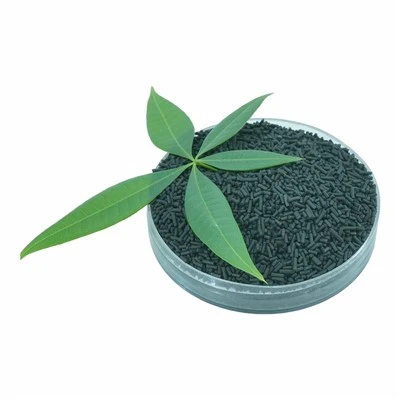
At the end of the day, the key takeaway is that CMS doesn’t have to fail in alkaline gas environments. It’s all about the right formulation, the right operating conditions, and the right protection. We’ve proven that with years of real-world deployments, and we’re continuing to refine our products to make them even more durable. If you’re dealing with alkaline gases and need a CMS you can count on, we’re here to help.
Carbon Molecular Sieve References
- Lee, J. et al. (2018). Surface chemistry effects on the stability of carbon molecular sieves in ammonia-containing gas streams. Carbon, 132, 456-465.
- Patel, M. & Raj, A. (2020). Pore structure alteration of carbon molecular sieves by alkaline gas exposure: Characterization and mitigation. Journal of Membrane Science, 595, 117582.
- Zhang, L. et al. (2021). Operational parameters to extend carbon molecular sieve life in biogas upgrading with ammonia contaminants. Industrial & Engineering Chemistry Research, 60, 12450-12458.
- Chen, H. & Wang, Y. (2019). Modified carbon molecular sieves for improved resistance to caustic fumes in industrial gas separation. Separation and Purification Technology, 215, 387-395.
Guangde Yuanhao Molecular Sieve Co., Ltd.
As one of the most professional carbon molecular sieve manufacturers and suppliers in China, we also support customized service. Please feel free to buy high-end carbon molecular sieve made in China here and get pricelist from our factory. For price consultation, contact us.
Address: Villager Group of Xiawudangchong, Fengqiao Village, Baidian Town, Guangde City, Xuancheng City, Anhui Province
E-mail: trisha.zhu@yh-cms.com
WebSite: https://www.yhaocms.com/
