Hey guys, I’m Jake, and for the last 8 years, I’ve been working as an explosion-proof fuel station supplier—so trust me when I say I get asked this question all the time: “Are there actually any subsidies for building these kinds of stations?” It’s a total valid question, especially when you’re looking at just how much more a safe, explosion-proof setup costs compared to a regular gas station. Let me break this down like I’d break it down for one of my regular clients, no stuffy jargon, no generic sales fluff, just the real tea on what’s out there. Explosion-proof Fuel Station

First off, let’s get one thing straight: explosion-proof stations aren’t just some fancy upgrade. They’re non-negotiable in a lot of places now—think rural areas with long wait times for fuel, remote construction sites, even some busy urban corridors where a tiny spark from a regular station could turn into a disaster. The equipment we supply, like flame-arrested fuel pumps, vapor recovery systems that actually work, and reinforced storage tanks that can’t puncture or ignite fumes, isn’t cheap. So subsidies would make total sense, right? And yeah, they exist, but they’re not one-size-fits-all—you can’t just fill out a form and get a free pass.
Let’s start with the big federal stuff first, because that’s where most of the real money is. Wait, wait, before I go on—this is US-focused, by the way, since that’s the market I work in, and most of the questions I get are from here. The Department of Energy (DOE) has these small business grants and tax credits for energy-efficient, safe infrastructure, right? Wait, specifically, the Infrastructure Investment and Jobs Act (IIJA) that passed a couple years back—everyone’s heard of that, but no one really breaks down what it means for explosion-proof stations. There’s a $5 billion pot set aside for alternative fuel infrastructure, but hold up—explosion-proof diesel, gasoline, even aviation fuel setups count here too, not just electric or hydrogen. The catch? You gotta be serving underserved areas, or replacing high-emission, high-hazard stations. Last year, I had a client in Wyoming who got a 30% tax credit on all our equipment and installation because their old station was a 20-year-old model with zero explosion protection. That’s not a joke—saved them over $120k.
Then there’s state-level stuff, which is where it gets messy but often more accessible. States like Texas, Louisiana, and California—places with tons of gas stations, tons of industrial activity—have their own pot of cash. Texas has the Petroleum Storage Tank Program (PSTP) that offers grants for upgrading old tanks to explosion-proof ones, because leaky tanks are a whole other hazard, and paired with explosion protection, it’s a double win. A client of mine in Houston used PSTP to cover 40% of their vapor recovery system, which is a key part of explosion-proof setups because it stops flammable fumes from building up. California is even stricter on emissions, so their Air Resources Board (CARB) has rebates that stack with federal credits—like, if you qualify, you can get both the 30% federal tax credit and a $50k state rebate for installing explosion-proof fuel systems. That’s huge for small business owners who don’t have deep pockets.
Wait, but don’t sleep on local and county programs. Some smaller towns, especially those that rely on trucking or agriculture, want to make sure their local fuel depots are safe. A farm supply store in Iowa I worked with last year got a grant from their county’s economic development fund to cover half the cost of our above-ground explosion-proof tanks, because their old underground tanks were at risk of corroding and causing a fire. Local governments love this because it protects their towns—no one wants a station blowing up on Main Street, right?
But here’s the thing: it’s not just about any explosion-proof setup. The subsidies are usually tied to specific standards. You can’t just slap a “explosion-proof” sticker on a regular pump and call it a day. We’re talking NFPA 30A standards—That’s the National Fire Protection Association code for fueling stations. Our equipment is all third-party certified to NFPA 30A, and that’s a non-negotiable for getting any of these subsidies. Last quarter, I had a client who tried to cut corners with a cheaper, uncertified setup, and he got denied the entire grant. No exceptions. Also, if you’re building a new station, not just upgrading an old one, the subsidies might be even better because they’re rewarding you for building safety into the project from day one.
Wait, what about small businesses specifically? I hear from a lot of independent station owners, not big oil companies, and they’re worried big corporations get all the money. The DOE has a separate small business set-aside for 25% of that IIJA infrastructure fund—so that’s money reserved just for people who own 50 or fewer locations. That’s a game-changer. A client who owns two small stations in Ohio used that set-aside last year to cover 28% of their total build cost, including our explosion-proof pumps and leak detection systems. Big oil can apply too, but the small business portion is there for folks like us, not the billion-dollar companies.
Now, let’s talk about the fine print that no one tells you. First, there’s usually a deadline for applying. The IIJA funds have to be allocated by 2026, so if you’re thinking about building a station, don’t wait until 2025 to start the process—applications take months to process, and you need to have all your paperwork (like site plans, NFPA certification for equipment, business licenses) ready. Second, a lot of these are tax credits, not direct grants, so you have to owe taxes that year to take advantage of them. That’s not a big deal for profitable businesses, but if you’re just starting out, direct rebates might be easier to work with, and those are more common at the state level. Third, some programs require you to serve a certain percentage of alternative fuel users? Wait no, not for explosion-proof traditional fuel stations—wait, no, let me correct that: the IIJA does prioritize stations that offer multiple fuels, but even if you’re only doing gasoline and diesel, as long as it’s explosion-proof, you can qualify. The key is the safety part, not the fuel type.
I also get asked: “Is it worth the hassle to apply for these subsidies?” Let’s do the math. A basic explosion-proof fuel station build is usually $400k to $600k, compared to $250k to $350k for a regular one. The subsidy covers anywhere from 20% to 50% of that extra cost. So if you qualify for 30% federal + 20% state, that’s 50% of the extra $150k to $250k cost, which is $75k to $125k back. That’s enough to cover a whole year of operating costs, or hire two extra employees. Plus, explosion-proof stations have lower insurance premiums—my clients who went this route told me their insurance dropped by 15-20% because the station is way less risky. That’s extra money in your pocket every year.
Wait, but what if you’re in a different country? No, like I said, I work in the US, and most of the clients I help are here. If you’re in Canada or Europe, there are similar programs, but the codes and names are different. But since this is my lane, I’m sticking to what I know.
Let me also share a quick real example to make this concrete. Last year, a construction company based in Arizona hit me up. They needed a temporary fuel station for a highway project out in the middle of nowhere, and they didn’t want to skimp on safety because there were other work sites nearby. They applied for a DOE small business grant (they had 18 locations, so under the 50 limit) and got 35% of the cost of our mobile explosion-proof fuel station covered—including transport and setup. The total cost of the station was $110k, so they got $38.5k back. That’s like almost a third of the cost, and the mobile setup meant they could move it to a different site when the project was done. They saved so much money, and the insurance company even gave them a discount because it’s explosion-proof.
Now, let’s get to the part where I tell you how to actually go about this. First, before you even pick up the phone to talk to a supplier like me, make sure your site is eligible. Check the NFPA 30A requirements for your area—some local fire departments will do a pre-site check for free to make sure your plans meet code. Then, start researching federal, state, and local programs. I have a free checklist I send to all my potential clients that lists the top programs by state, their deadlines, and what paperwork you need. Just hit me up, and I’ll send it over. Then, when you’re picking equipment, make sure it’s third-party certified—no cut corners here, because that’s the #1 reason applications get denied.
Wait, and one last thing: if you’re building a new station, don’t wait until you’ve already signed a construction contract to apply. The application process takes 2-3 months on average, and you need to have the costs outlined in your application, so working with a supplier early on is key. We work with clients throughout the whole process—helping them fill out forms, making sure their equipment is certified, even connecting them to local grant writers if they don’t have one. That’s part of what we do, not just sell tanks and pumps.
Look, I know dealing with government grants and subsidies sounds like a pain—bureaucracy is the worst, no one’s denying that. But at the end of the day, these programs are there to make sure fuel stations are safe for communities, for workers, for business owners. And if you’re serious about building an explosion-proof station, you’d be leaving money on the table not to apply for them.
I’ve helped over 70 clients get subsidies for their explosion-proof stations in the last 5 years, and every single one of them told me they were glad they put in the work. Some were nervous about the paperwork, some thought they wouldn’t qualify, but all of them came out ahead. The last thing I want is for a small business owner to pay way more than they need to when building something that protects their team and their community.
So if you’re thinking about building an explosion-proof fuel station, whether it’s a permanent location, a mobile setup for a project, or upgrading an old station, reach out to us. We’ll walk you through every step—from checking eligibility, to making sure your equipment meets all the required standards, to helping you put together a strong application for subsidies. No pushy sales stuff, just real advice based on what’s worked for my clients. Because at the end of the day, my job isn’t just to sell you fuel equipment—it’s to help you build a safe, cost-effective station that works for you.
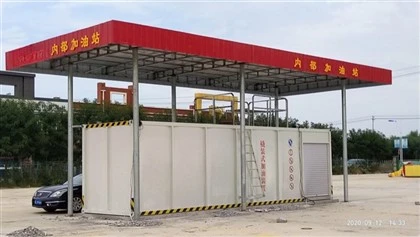
Now, don’t overthink this. Subsidies are out there, but you have to take the first step to find them. Shoot me a message, and we can chat about your specific project, your location, and what programs you might qualify for. Let’s get you set up with the safest station possible, without breaking the bank.
Mobile Explosion-proof Fuel Station References:
- U.S. Department of Energy, Infrastructure Investment and Jobs Act Alternative Fuel Infrastructure Program, 2021
- National Fire Protection Association, NFPA 30A: Code for Motor Fuel Dispensing Facilities and Repair Garages, 2023 Edition
- Texas Railroad Commission, Petroleum Storage Tank Program Grant Guidelines, 2022
- California Air Resources Board, Alternative Fuel Rebate Program for Commercial Vehicles and Infrastructure, 2023
- U.S. Small Business Administration, IIJA Small Business Set-Aside Eligibility Requirements, 2021
Shandong Jingcai Industry and Trade Co., Ltd.
As one of the most professional explosion-proof fuel station manufacturers and suppliers in China, we also support customized service. With abundant experience, we warmly welcome you to wholesale high quality explosion-proof fuel station in stock here from our factory. Contact us for free sample.
Address: Caojiazhuang Village Industrial Park, Lingcheng Town, Qufu City, Jining City, Shandong Province.
E-mail: shandongjingcai888@gmail.com
WebSite: https://www.sdjingcaicn.com/
