If you’ve ever driven past a commercial pig farm and caught a glimpse of the narrow, metal enclosures holding sows and their newborn piglets, you’ve probably wondered: How long do those sows actually stay in farrowing crates? As someone who’s been designing and supplying these systems for over a decade—working side by side with pork producers across North America and Europe—I get this question all the time, and it’s not one with a one-size-fits-all answer. The truth is, the length of time a sow spends in a farrowing crate depends on a mix of animal welfare science, farm efficiency, and regional regulations, and getting that balance right is what makes a well-designed crate (and a successful operation) work. Let’s break it down, straight from the perspective of someone who builds these systems for a living. Farrowing Crate

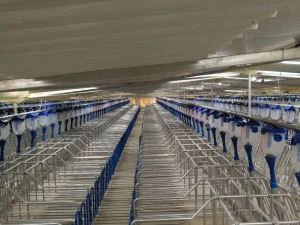
First, let’s start with the basics: What even is a farrowing crate, and why do we use them? For anyone new to the industry, a farrowing crate (sometimes called a farrowing stall) is a 5 to 7-foot wide, 7 to 8-foot long pen designed to hold a gestating sow from just before she gives birth (farrowing) until her piglets are weaned. The narrow rails prevent the sow from turning around completely, which sounds restrictive at first—until you factor in what happens when a 500-pound sow lies down. Newborn piglets are tiny, fragile, and can be easily crushed if the sow shifts her weight suddenly. That’s the core purpose: it’s a tool to reduce pre-weaning piglet mortality, which is one of the biggest challenges pig farmers face. But how long is that period, exactly?
Most conventional commercial pork operations in the U.S. keep sows in farrowing crates for an average of 21 to 28 days, or 3 to 4 weeks. Wait, I know that number might surprise you—some producers I work with used to keep sows in crates for up to 35 days back in the 90s, before we had better weaning protocols. But over the past 20 years, animal welfare research and farm efficiency data have pushed that window shorter. Let’s talk about why. A 2019 study from the University of Illinois Extension, which we reference all the time in our crate design sessions, found that weaning piglets at 21 days instead of 28 days reduces sow stress and improves her reproductive performance in her next litter. Sows that are weaned earlier return to estrus (heat) about 2 days faster, which means they can go back to breeding sooner, producing more litters per year. That’s a win for both animal welfare and the producer’s bottom line.
But here’s the thing: that 21 to 28-day average isn’t universal. I’ve worked with farms in Sweden that follow EU animal welfare regulations, which limit farrowing crate use to a maximum of 28 days—so sows are out within 4 weeks, no exceptions. In contrast, some small-scale, family-owned farms in the U.S. that focus on pasture-raised pork might keep sows in crates for just 14 days, because they use a different system: they move sows to outdoor farrowing huts, so the crate is only for the immediate birthing period. That’s a key distinction: the length hinges on what kind of operation you run, and what regulations you have to follow.
Let’s get into the science behind when a sow is ready to leave the crate. Sows typically farrow (give birth) 114 days after breeding, and the birthing process itself takes 2 to 6 hours for most sows, with a litter of 10 to 14 piglets. Once all the piglets are born, they need colostrum—the first milk from the sow, which has antibodies to protect them from disease. That colostrum production peaks in the first 24 to 48 hours after birth, so the first week in the crate is non-negotiable for piglet health. After that, the focus shifts to weaning. When piglets are 2 to 3 weeks old, their digestive systems are developed enough to eat solid feed, so they don’t rely on the sow’s milk as much anymore. That’s when producers start the weaning process, and that’s when the sow is ready to move back to gestation pens or group housing.
But I want to be clear: not all crates are the same, and that affects how long a sow stays in them. Over the years, we’ve evolved our crate design to be much more sow-friendly than the old, narrow, metal bar crates of the 80s and 90s. Our crates have sloped flooring to keep the area dry, individual feeding stations so each sow gets the right amount of feed (critical during lactation, when sows eat 2 to 3 times their normal amount), and piglet heating pads along the sides—since piglets can’t regulate their body temperature for the first few weeks. We also include “creep areas” for piglets, spaces outside the main crate where they can move around safely while the sow is still in the crate, which lets us wean them a little earlier without compromising their health. That’s part of why we can support producers who stick to the 21-day timeline, because our systems reduce stress for both sows and piglets during that shorter period.
I’ve heard a lot of debate lately about phasing out farrowing crates entirely, and I get where that conversation comes from. Consumer demand for more humane pork is higher than ever, and that’s pushed governments in many countries to ban crates over time. For example, California passed Proposition 12 in 2018, which requires that pork sold in the state come from sows with enough space to turn around fully. That means some California producers are moving to group farrowing systems, where sows are in larger pens with other sows and their piglets, instead of individual crates. But even in those group systems, the period sows stay in farrowing housing is still roughly 21 to 28 days—the same timeline, just a different setup. The goal is still to reduce piglet mortality, and that window of time doesn’t change much, because it’s tied to piglet development. As a supplier, we’ve adapted to that shift: we now manufacture modular farrowing systems that can be converted from individual crates to group pens, so producers can transition as regulations change without replacing their entire facility.
Wait, but what about sows that have larger litters? I’ve worked with a farm in Iowa that averages 16 piglets per litter—way above the national average of 12. For those operations, they might keep sows in the crate an extra 3 to 5 days, because larger litters mean more piglets competing for milk, and they need a little more time to build up their strength and start eating solid feed. That makes sense, right? It’s not a one-size-fits-all rule; it’s tailored to the specific needs of the herd. I always tell new producers that the best way to determine how long to keep a sow in the crate is to track two metrics: piglet survival rate and sow reproductive performance. If piglet mortality is above 10%, they might need to extend the crate period a few days. If sows are taking longer than 5 days to return to estrus after weaning, they might be able to wean a few days earlier. That data-driven approach is what works, and that’s what we design our systems to support—we include monitoring slots so producers can track feed intake, litter growth, and sow behavior without having to add extra equipment.
I want to address a common misconception I hear all the time: that sows are trapped in farrowing crates for months at a time. No—from breeding to weaning, a sow’s entire time in specialized housing is about 16 weeks, with only 3 to 4 of those weeks in the farrowing crate. The rest is spent in gestation pens, either individual or group housing, before breeding again. So that 3 to 4 week window is a tiny fraction of a sow’s productive life, and it’s a short period that has a huge impact on the rest of the farm’s output. As someone who’s spent years building these crates, I see that every day: a well-managed farrowing period means healthier piglets, healthier sows, and a more sustainable operation overall.
Now, if you’re a pork producer reading this, or someone who’s looking to set up or update your farrowing system, you’re probably wondering: how do I know what’s right for my operation? The first step is checking your local and regional regulations, because those will set the minimum and maximum crate use periods. Then, look at your herd’s specific needs: litter size, existing mortality rates, and your goals for reproductive efficiency. If you’re in an area with upcoming regulations phasing out individual crates, like the EU or parts of the U.S., you’ll want to invest in a flexible system that can adapt to group housing as you phase in changes.
At the end of the day, the question of how long sows stay in farrowing crates isn’t just a number—it’s a balance of animal welfare, science, and farm profitability. For the producers I work with, that balance is what matters most. We don’t just build crates; we build systems that support producers to raise healthy pigs, care for their sows, and meet the needs of consumers and regulators. If you’re a producer looking to update your farrowing setup, or you have questions about how our systems align with your timeline and goals, we’re here to talk through your specific needs. We’ve worked with operations of all sizes, from small family farms to large commercial complexes, and we can help you find the right solution for your herd.
Cattle Drinker If you’re ready to discuss your farrowing crate needs and learn more about how our systems can support your operation’s goals, please reach out to connect with our team to start the procurement conversation. All references to animal welfare and production data are rooted in peer-reviewed research and industry extension work, including studies from the University of Illinois, the European Food Safety Authority, and the National Pork Board.
Qingdao Shengxin Metalware Co., Ltd.
Qingdao Shengxin Metalware Co., Ltd. is one of the leading farrowing crate manufacturers and suppliers in China, providing the best quality farrowing crate with competitive price. Welcome to contact our factory to place orders.
Address: Wangtai Industrial Zone, Hungdao District, Qingdao City, Shandong Province
E-mail: sale@sxequipment.com
WebSite: https://www.sxequipment.com/
