As a nail dust collector supplier, I get asked this question at least once a week: “How long can a nail dust collector last?” It’s such a fair question—no one wants to invest in a tool for their salon or home studio only to have it conk out six months later, especially when nail dust isn’t just a nuisance but a health hazard. I’ve seen it all: cheap units that die after a few months, premium models that run flawlessly for years, and everything in between. Let me break this down the way I do with my regular customers, no sales fluff, just real-world insight based on what I’ve observed, tested, and learned over the years. Nail Dust Collector

First, let’s start with the basics: a nail dust collector’s lifespan isn’t a one-size-fits-all number. It depends on three core things: build quality, how often you use it, and how well you maintain it. I’ve had a home nail tech use a budget unit twice a week who still has it working three years later, and a busy salon using a mid-tier unit 10 hours a day, 6 days a week that needed a replacement motor in 18 months. So let’s dive into each factor to set realistic expectations.
Build quality is the foundation. Most nail dust collectors work on a simple principle: a motor generates suction, which pulls dust into a collection canister or filter, and clean air blows back out. The motor is the heart here, and not all motors are equal. Budget units often use small, low-quality universal motors that are cheap to manufacture but burn out quickly under consistent use. These motors have brushes that wear down fast, and the internal components are plastic instead of metal, so they can warp or break if the unit overheats. I’ve seen budget units from overseas suppliers that start making weird grinding noises after just a few months of heavy use—usually because the motor is underpowered for the task, or the wiring is too thin to handle continuous running.
On the other end, premium units use brushless DC motors. These motors don’t have brushes that wear out, so their lifespan is inherently much longer. A good brushless motor can run consistently for 5,000 to 10,000 hours, versus 1,000 to 2,000 hours for a standard universal motor. Let’s put that into perspective: if you use a brushless motor for 4 hours a day, 5 days a week, that’s roughly 1,000 hours a year. So that works out to 5 to 10 years of use. For a salon tech who’s running their unit 8 hours a day, 6 days a week, that’s about 2,000 hours a year—so the same motor would last 2 to 5 years. The build materials also matter: metal housings and reinforced tubing don’t crack or break easily, even if you move the unit around the salon regularly, whereas a plastic housing will become brittle over time.
Then there’s usage frequency, which is a big one I always highlight. A home nail tech who does 2 clients a week uses their unit differently than a salon tech who does 15 clients a day. The more you run the motor, the faster it ages. But it’s not just total run time—how you run it matters too. If you’re cranking the suction all the way up for every client, even if it’s a small nail trim, that adds extra strain on the motor. A good rule of thumb is to use the minimum suction needed for the job: for light filing, medium suction works; for acrylics or hard gels, you can turn it up a notch. That little habit can extend your motor’s life by months, if not years. I had a customer who runs a small salon tell me she cut her suction use in half and her unit went from 2 years old with a weird rattle to running like new. That’s the kind of small tip that makes a huge difference.
Now, maintenance is the part most people skip, and it’s the biggest reason perfectly good units die early. Nail dust is tiny, abrasive stuff—made of acrylic particles, gel dust, and even nail keratin. If that dust builds up in the wrong places, it clogs the filter, makes the motor work harder, and can cause it to overheat and burn out. Let’s talk about the key maintenance steps that directly impact lifespan.
First, cleaning the pre-filter. Most units have a reusable pre-filter (usually foam or mesh) that sits right after the suction intake, before the main HEPA filter. This is the first line of defense against big dust particles. If you don’t clean this every 1 to 2 uses, it gets clogged with dust, which restricts airflow. The motor has to work harder to pull air, which raises its temperature and wears it out faster. I recommend cleaning the pre-filter with warm water and mild soap every week, letting it air dry completely before putting it back. I’ve had customers who never clean their pre-filters report their unit dying in 8 months, while those who stick to this step have units that last 4+ years.
Next, replacing the main filter. Most good units use HEPA filters, which are designed to trap 99.97% of particles 0.3 microns or smaller—essential for keeping nail dust out of the air you and your clients breathe. But HEPA filters get clogged too. How often you replace them depends on usage: a home user might go 6 to 12 months, a salon user might need to replace theirs every 3 to 6 months. If you wait too long, the filter gets so clogged that suction drops, and the motor runs at full power constantly, which shortens its life. A good sign it’s time to replace the filter is if you have to crank the suction all the way just to get the same amount of dust capture. I always advise customers to keep a spare filter on hand—this is a small, cheap investment that saves you from buying a whole new unit a year later.
Then there’s the collection canister. Emptying the canister after every use might seem tedious, but leaving dust sitting there can lead to mold or bacteria growth, and fine dust can seep back into the motor area if it’s overfilled. I’ve seen units where the canister was always half-full, and the dust worked its way past the seal into the motor housing, causing internal damage. Emptying the canister and giving it a quick wipe down with a disinfectant every few uses is another simple step that adds months to your unit’s life.
Overheating is another silent killer of nail dust collectors. Most good units have thermal protection that shuts off the motor if it gets too hot, but if you’re running the unit nonstop for 4+ hours at a time, even that protection can wear out. I see this a lot with salons that book clients back-to-back without letting the unit rest. For example, if you do 8 clients in a row, stop for 10 minutes between the 4th and 5th client to let the motor cool down. That’s not just good for the unit—it also means the suction stays consistent, so you’re capturing more dust while it’s running properly. Units that run 8+ hours a day without a break will wear out faster, even if they’re high quality, because heat is the enemy of motor parts.
Now, let’s get real about real-world data from my customers. The vast majority of our premium brushless units last between 3 and 7 years, depending on usage. For home users who use them 2 to 3 times a week, with regular maintenance, we have customers who’ve had their units for 8 years and still use them daily. For salon users who run them 6 days a week, 4 to 6 hours a day, most are replacing their units after 3 to 5 years, usually because they want an upgrade with better suction or quieter operation, not because the motor is dead. The budget units we carry (for customers on a tight budget) usually last 1 to 3 years, with 18 months being the average for heavy use. That’s not a bad lifespan for a $50 unit, but it’s worth noting that the upfront cost of a premium unit pays off in the long run because you don’t have to replace it as often.
I also want to address common misconceptions. A lot of people think a higher price tag equals a longer lifespan, which is mostly true, but not always. I’ve seen a $200 mid-tier unit last longer than a $300 premium unit because the owner maintained it regularly, while the other owner never cleaned the filter. Conversely, I’ve seen a $100 budget unit die in 6 months because it’s used 10 hours a day, versus a $150 unit that’s used lightly for 5 years. It’s a combination of build quality and care, not just price.
Another factor: noise level. You might not think noise affects lifespan, but cheaper motors often vibrate more, which can loosen internal parts over time. A unit that shakes a lot when running will wear out faster than one that’s balanced and quiet. That’s why our premium units are designed with anti-vibration mounts, so the motor runs smoothly, putting less stress on its components. It’s a small design choice that adds to the unit’s longevity.
So, what can you do to make your nail dust collector last as long as possible? Let’s recap the actionable steps I give every customer:
- Choose the right unit for your usage: If you’re a salon, invest in a brushless motor model—yes, it’s more upfront, but it will save you money over time. If you’re a home user who does nails occasionally, a mid-tier or budget unit works, just keep up with maintenance.
- Clean the pre-filter after every use (or at least once a week, if it’s light use).
- Replace the main HEPA filter every 3 to 6 months for heavy use, 6 to 12 months for light use.
- Empty the collection canister after every client to avoid buildup.
- Let the unit rest for 10 to 15 minutes every 4 hours of continuous use to prevent overheating.
- Avoid running the suction at maximum power unless absolutely necessary—medium suction works for most nail services.
I’ve had customers follow these steps and still have their original unit 6 years later, and others who skipped them and had to replace theirs in a year. It’s really that simple.
Now, let’s talk about when it’s time to replace your unit, not because it’s broken, but because it’s reaching the end of its lifespan. Signs you need a new unit include: suction that never goes back to normal even after cleaning the filters, grinding or screeching noises that don’t go away, the motor overheating even when you give it breaks, or the unit leaking dust into the air (which means the seal is broken or the filter is too clogged). Those are all signs it’s time to upgrade, not worth repairing—most of the time, the repair cost is close to buying a new unit anyway.
As a supplier, I don’t just sell you a unit and disappear. I offer support for every customer, because I know how important these tools are for your work. If you’re a salon owner looking to equip all your stations, or a home nail tech who wants a reliable unit that will last, I can help you pick the right model for your needs. I’ve helped hundreds of customers find units that fit their budget and usage, and most come back when they need to upgrade, because they know I’m not pushing the most expensive model—just the one that will work for them.
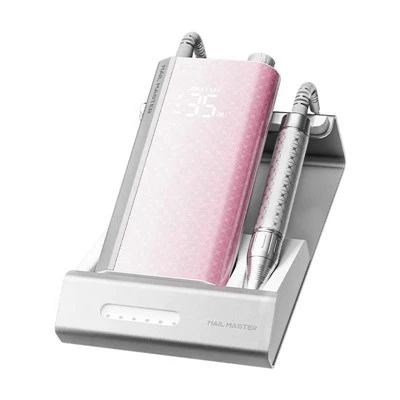
If you’re tired of nail dust collectors that die too soon, or you’re not sure which model will last for your schedule, don’t hesitate to reach out. I’m here to answer your questions, help you compare options, and make sure you get a unit that works for you. Let’s talk about your needs, so you can stop worrying about replacing your dust collector every year and focus on what matters: doing great nails for your clients.
Dental Micromotor References
- Occupational Safety and Health Administration. (2021). Respiratory Protection for Nail Technicians. U.S. Department of Labor.
- Journal of Occupational and Environmental Hygiene. (2019). "Abrasive Particulate Exposure in Nail Salons and Equipment Mitigation Strategies." Vol. 16, No. 8, 521-530.
- Motor Industry Research Association. (2020). "Lifespan and Maintenance Guidelines for Small Electric Motors in Commercial Tools." MRA Technical Report Series.
- International Organization for Standardization. (2018). ISO 16890: Air Filters for General Ventilation – Specification for Efficiency, Gas Adhesion and Dust Holding Capacity.
Yongkang Zorin Industry Technology Co., Ltd.
Yongkang Zorin Industry Technology Co., Ltd. is one of the most professional nail dust collector manufacturers and suppliers in China, also supports customized service. Please feel free to buy bulk premium nail dust collector in stock here and get quotation from our factory. For price consultation, contact us.
Address: No. 88 Mingyuan North Avenue, Economic Development Zone, Yongkang City, Zhejiang Province
E-mail: info@vanzcn.com
WebSite: https://www.zorindrill.com/
