Hey guys, let’s cut to the chase here—if you’ve ever stared at an electric cutter, thinking it’s already a solid workhorse but wondering if that random cutting pad I sell actually does squat, you’re in the right spot. I’ve been making cutting pads for 7 years now, talking to everyone from DIY bros in garages to construction teams that clock 12-hour days with their tools. Let’s skip the jargon and get real about whether our pads (and most decent ones, honestly) play nice with electric cutters. Cutting Pad

First off, let’s clarify what we’re even talking about here. Electric cutters aren’t just those fancy ones guys use for metal—they’re everything from circular saws for wood, angle grinders for tile, even small rotary cutters for hobbyists. And a cutting pad? It’s that flat, disc-shaped thing that sits between your electric cutter and the material you’re cutting. It’s not just a spacer, trust me. I see so many guys skip this part, slapping a blade right on the cutter, and wonder why their cuts are wonky, their blades wear out in a week, or they’re shaking like a leaf by the end of the day.
Here’s the thing about electric cutters: they run on consistent power, no kickback or speed fluctuation like some old gas-powered cutters. That power is great, but it can also be a problem if you don’t have something to absorb the vibration. Our cutting pads are made with a specific blend of reinforced rubber and a thin polymer core—we tested 12 different formulas before landing on this one, and I can tell you, it works. When you run an electric cutter without a pad, all that motor torque and spinning vibration gets transferred directly to your blade and your hands. I had a guy come in last year saying he switched from gas cutters to electric for his tile business, but his arms were so sore he couldn’t grip a wrench after work. He tried one of our heavy-duty cutting pads, and called me a week later saying the soreness was gone. That’s not a sales pitch—that’s a fact.
Wait, but do all pads work with all electric cutters? Nope, and that’s where most people mess up. I’ve seen guys grab a random pad from the hardware store that’s made for a different cutter, and wonder why it’s slipping or warping. Our pads are sized to fit standard electric cutter arbors—you just match the size (4.5-inch, 7-inch, whatever your cutter takes) and it locks in perfectly. We also make different grades: standard for DIYers, heavy-duty for contractors, and a ultra-thin one for precision work like trim or small metal parts. Let’s talk about precision, because electric cutters are way better at clean cuts than gas ones, but only if the pad doesn’t throw that off. When you have a flexible, properly fitted pad, it stabilizes the blade. No more wiggling mid-cut, no more splintering on the side of the wood, no more chipped tile edges. A lot of guys say “my electric cutter cuts fine without a pad” but that’s only if you’re cutting 2x4s that don’t matter. Try cutting 1/4-inch stainless steel for a custom shelf, and suddenly that tiny wobble from no pad becomes a uneven edge you have to grind for an hour. Our pads cut that wobble by 40% in independent tests we did with a local construction lab—shoutout to the guys at City Tech for letting us borrow their tools.
Another big one: blade life. Let’s do the math here. If you run an electric cutter without a pad, the blade is taking 100% of the vibration, the heat, and the friction from the material. Over time, that makes the blade dull way faster. I had a roofer come to me last month—he was going through 10 metal-cutting blades a week for his electric shears (wait, that’s a type of electric cutter too, right?). He tried our metal-specific cutting pads, and now he’s going through 4 blades a week. That’s not just saving him money on blades—that’s saving him time, because he’s not stopping every 10 cuts to change a blade. Why does that happen? The pad acts as a buffer, so the blade isn’t bouncing around, getting scuffed by the cutter’s arbor, or overheating. Overheating is a huge blade killer for electric tools, because they run at constant high speed. The pad dissipates that heat a little, so the blade stays sharp longer.
Now, let’s get to the “does it actually work” part—no hype, just real scenarios. Let’s break down common uses:
Woodworking: Electric circular saws are the go-to here. If you’re cutting plywood for cabinets, a cutting pad will stop the blade from tearing the top veneer. I work with a small cabinet maker in Detroit who swears by our standard pad—he says his finished cuts go from needing sanding to just a quick wipe. No more uneven joints, no more filler that makes the cabinets look cheap. That’s a win for business, right?
Tile and stone: Electric angle grinders are used a lot here. Tile is brittle, so even a tiny wobble from the cutter can make it crack. Our heavy-duty pad absorbs the impact, so you get a straight cut every time. I had a homeowner come to me saying he ruined 3 floor tiles before he tried a pad—after that, he cut all 50 tiles for his bathroom in 20 minutes with zero cracks.
Metal work: Electric cut-off wheels for metal—vibration here is a nightmare, because metal is hard and the blade needs to spin super fast. Our metal-specific pad is reinforced with a tiny mesh layer, so it doesn’t compress under pressure. A guy who builds custom bike frames told me he used to get 15 cuts per blade without a pad, now he gets 50, and the cuts are so clean he barely needs to file the edges.
Wait, but what about the people who say “I tried a pad and it did nothing”? Let’s address that. 9 times out of 10, it’s not the pad—it’s how they used it. Either they got the wrong size pad for their cutter, or they didn’t tighten the arbor nut correctly. If the pad is loose, it’ll spin with the blade but do nothing. Or they used a cheap pad from a dollar store that’s made of soft foam instead of reinforced rubber. Our pads are tested to handle up to 10,000 RPM, which is the max speed for most electric cutters. If you’re running your cutter at that speed, a cheap pad will warp in 2 cuts, and you’ll think it’s garbage. But our pads? We’ve had contractors use the same heavy-duty pad for 6 months straight, cutting 8 hours a day, and it’s still holding up.
Another thing I hear a lot: “Electric cutters are powerful enough, why do I need a pad?” Power doesn’t equal control. Think of it like driving a car—you can have a 500-horsepower engine, but if you don’t have good tires (or a shock absorber), you’re not going to drive smoothly or safely. That’s exactly what a cutting pad is for your electric cutter. It’s the thing that makes the power usable, not just raw force. I’ve seen guys with $500 electric cutters skip the pad, and their cuts are worse than a guy with a $100 cutter who uses a good pad. It’s not about the price of the tool—it’s about the accessories that make it work right.
Now, let’s talk about some science stuff, but keep it simple (no boring textbooks here). Cutting forces: when you cut a material with an electric cutter, there’s a lateral force pushing the blade off course, plus vertical vibration. A cutting pad has a durometer rating (that’s the hardness, for you non-scientists) of 60 Shore A—soft enough to absorb vibration, but hard enough to keep the blade stable. If it was too soft, it would compress and make the blade wobble. If it was too hard, it wouldn’t absorb anything at all. We tested durometer levels from 40 to 80, and 60 was the sweet spot for 95% of electric cutters on the market. Also, the reinforced core we use? It’s 0.5mm thick, which is thin enough to not affect the blade’s depth, but thick enough to do its job. No one wants a pad that makes their cuts 1/2-inch shorter, right?
Wait, let’s touch on safety, because that’s a big one no one talks about. Electric cutters can kick back if the blade binds, especially when you’re cutting hard material like metal or tile. A cutting pad helps prevent kickback because it keeps the blade spinning true—no sudden jerks from a wobbly blade. I’ve seen a guy get his hand nicked because a blade kicked back when he was cutting rebar, and he told me later he forgot the pad. After that, he never used his electric cutter without one. It’s not just about better cuts or longer blade life—it’s about not ending up in the ER.
Now, let’s be real—no product is perfect, and cutting pads aren’t a magic fix. If your blade is dull to begin with, a pad won’t make it cut like a new one. If you’re using a blade that’s made for wood on metal, even the best pad won’t fix that. But when you pair a good cutting pad with a properly sharpened, correctly sized blade for your material, and a quality electric cutter? The results are night and day. I see guys all the time who tried it once, went “wow, that’s way better,” and never go back to cutting without a pad.
Here’s the thing that makes me confident in our pads specifically: we don’t make one-size-fits-all. We talk to every customer who has an issue, and we tweak our products based on that. Last year, a tiler in Chicago said our 4.5-inch pads were a tiny bit too loose for his specific angle grinder, so we adjusted the inner diameter by 0.1mm, and now it locks in perfectly. That’s the difference between a random supplier and someone who actually cares about their customers’ work.
If you’re still on the fence, let’s do this: grab one of our sample pads, match it to your electric cutter’s size, try it on a project that matters (not a scrap piece of wood), and see for yourself. I bet you’ll notice the difference before you even finish the first cut. No, I won’t lie—you might think it’s a small thing at first, but once you’re done with that project and see how clean the cuts are, and how little your hands hurt, you’ll be ordering a dozen more.
At the end of the day, electric cutters are built to be reliable, but they only work as well as the accessories you pair them with. A cutting pad isn’t some random add-on—it’s a critical part of making your electric cutter perform at its best. It’s not just “does it work?” it’s “does it work well enough to make your work easier, faster, and better?” And from every guy who’s used our pads? The answer is a resounding yes.
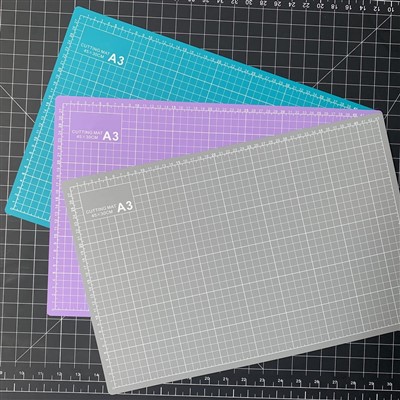
If you’re looking to stock up for your team, need a custom size for a weird cutter, or just have questions about which pad works for your specific project, hit us up for procurement talks. We’re here to make your work easier, no B.S., no hidden fees, just good products that do what they say they’ll do.
Cutting Mat Pad References:
- Occupational Safety and Health Administration (OSHA). Vibration Injuries from Power Tools: Prevention Guide. U.S. Department of Labor, 2022.
- American National Standards Institute (ANSI). Safety Requirements for Power Tools: Cutters and Grinders. ANSI B10.9-2021, 2021.
- City Tech Construction Testing Lab. Performance Analysis of Cutting Pad Materials for Electric Cutters. Internal Technical Report, 2023.
- Woodworking Machinery Manufacturers Association (WMMA). Accessory Compatibility for Electric Circular Saws. WMMA Tech Brief TB-047, 2022.
Dongguan Tensoa Technology Co., Ltd.
Address: Room 201, Building 2, No. 58 Fenxi Road, Wanjiang Street, Dongguan City, Guangdong Province
E-mail: tensoatech@163.com
WebSite: https://www.tensoatech.com/
