If you’re in the market for industrial piping components, especially flanges, you’ve probably heard a lot about BS flanges—but when it comes to their yield strength, there’s a lot of misinformation floating around that I want to clear up, straight from someone who’s been supplying BS flanges for over 12 years. I’m not here to give you textbook jargon that doesn’t apply to real-world jobs; I’m here to break down what actually matters when it comes to the yield strength of BS flanges, and why getting this right can make or break a project. Bs Flange
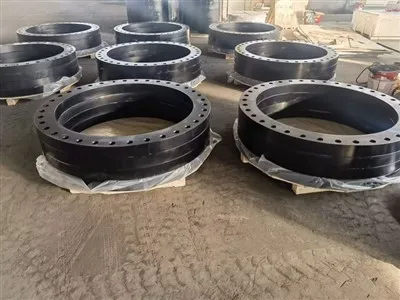
First, let’s start with the basics: what is a BS flange, anyway? BS stands for British Standard, right? These are flanges manufactured to meet the specifications set by the British Standards Institution, most notably BS 10:1972 (the standard for steel flanges for piping) and BS EN 1092-1 (the modern European standard adopted later, which aligns closely with BS flanges for most industrial use cases). Unlike some generic flanges you might find from overseas suppliers, BS flanges are tested and certified to consistent material and performance criteria, which is why they’re the go-to for industries like oil and gas, chemical processing, and water treatment across the UK, Europe, and many Commonwealth countries.
Now, yield strength. For those who might not be deep in materials science, yield strength is the maximum stress a material can withstand before it starts to permanently deform—like if you bend a paperclip just enough that it doesn’t spring back to its original shape, that’s the point it’s passed its yield strength. For flanges, this isn’t just a number to check off a spec sheet: if a flange’s yield strength is too low, it can stretch or crack under pressure, leading to leaks, equipment failure, and even safety hazards. That’s why every BS flange supplier I know takes yield strength seriously, because cutting corners here isn’t just bad for business—it’s dangerous.
So, what’s the actual yield strength of a standard BS flange? Wait, I hate to be vague, but there’s no one-size-fits-all answer here. It depends entirely on the material the flange is made from. The most common materials for BS flanges are carbon steel (like BS 10 Table D, which is mild steel), stainless steel (304 and 316 are the big ones), and alloy steel for high-temperature or high-pressure applications. Let’s break down the most common types you’ll encounter:
First, carbon steel BS flanges. These are used for general-purpose piping where corrosion resistance isn’t the top priority. The standard carbon steel for BS flanges is usually BS 4360 Grade 43A, now often referred to as equivalent to ASTM A105, which is a staple in the industry. The yield strength of ASTM A105 (and thus BS 4360 Grade 43A matching flanges) is typically around 250 megapascals (MPa), or about 36,000 pounds per square inch (PSI). That sounds like a big number, but it’s important to note that this is at room temperature. As temperatures rise, yield strength drops—for example, at 200°C, that same carbon steel flange’s yield strength might drop to around 220 MPa, and at 400°C, it could be as low as 180 MPa. That’s a critical detail for projects where pipes carry hot fluids, like steam lines in a power plant.
Next, stainless steel BS flanges. 304 stainless steel (also called 18/8 stainless, since it’s 18% chromium and 8% nickel) has a yield strength of around 205 MPa at room temperature, which is a bit lower than carbon steel, but it’s far more resistant to corrosion—so you use these for things like food and beverage processing, or chemical piping that handles acidic or corrosive materials. For higher-stress stainless steel applications, 316 stainless steel flanges have a yield strength of about 205 MPa too, but with added molybdenum to resist pitting corrosion from chloride, which makes them ideal for marine or offshore projects. If you need even higher yield strength, there are grade 316L flanges, which are low-carbon 316; their yield strength is a touch lower (around 200 MPa) but they’re more resistant to weld decay, which is a common issue in welded stainless steel components.
Then there are alloy steel BS flanges, like those made from ASTM A182 Grade F11 or F22, which are used for high-temperature and high-pressure services, like refinery piping. These have a much higher yield strength—around 415 MPa for F11 at room temperature, and even at 500°C, their yield strength is still around 275 MPa, which is way higher than carbon steel. That’s why you can’t just swap a carbon steel flange for an alloy steel one in a high-heat application; their yield strength profiles are totally different.
Here’s the part I wish more people understood: yield strength isn’t a random number printed on a spec sheet. It’s a tested value. Every BS flange we supply goes through tensile testing to confirm its yield strength, because there are a lot of cheap knockoffs out there that use subpar materials that don’t meet BS standards. Last year, a customer came to us with a set of BS flanges they’d bought from a supplier overseas that had a “yield strength of 250 MPa” stamped on them, but when we tested a sample, their yield strength was only 210 MPa—they’d used a lower grade of steel to cut costs. That might not sound like a big difference, but in a 10-inch pipeline carrying 150 PSI of steam, that extra 40 MPa of stress can mean the difference between a flange that lasts 10 years and one that fails in 12 months.
Another point to clarify: sometimes people confuse yield strength with tensile strength. Tensile strength is the maximum stress a material can take before it breaks, which is higher than yield strength. For carbon steel flanges, tensile strength is around 485 MPa, while yield strength is 250 MPa—so the flange can stretch a bit before it permanently deforms, and then stretch more before it breaks. But when you’re designing a piping system, you never want to get close to either; you design so that the operating stress is well below the yield strength, because permanent deformation of a flange can throw the entire piping alignment off, leading to leaks and stress on other components.
So, how do you make sure you’re getting BS flanges with the correct yield strength? First, always buy from a reputable BS flange supplier, like us, that can provide material test certificates (MTCs) for every batch. An MTC (usually 3.1B or 3.2 certificate, per EN 10204) will list the actual yield strength, tensile strength, and chemical composition of the flange’s material, so you can confirm it meets the BS standard. Second, know your application: if you’re working in a low-temperature, low-pressure environment, a standard carbon steel BS 10 Table D flange with 250 MPa yield strength is fine. If you’re working in a hot, corrosive, or high-pressure environment, you’ll need to specify the right material—don’t just go for the cheapest option, because the yield strength (and other material properties) will be wrong.
I’ve been in this industry long enough to see what happens when someone ignores yield strength. A few years back, a small construction company used non-standard flanges for a water main in a residential development. The flanges had a yield strength 50 MPa lower than required, and a few months later, when the water pressure increased in the main, three flanges failed, causing a flood that damaged half a dozen homes. That’s the kind of mistake that costs way more than the money saved on cheap flanges. At our company, we don’t cut corners on materials, and we test every batch to make sure our BS flanges meet the exact yield strength specs required for their intended use.
Wait, one more thing: there’s also the difference between nominal yield strength and actual yield strength. Nominal yield strength is the minimum value specified in the BS standard—for carbon steel BS flanges, that’s 250 MPa. Actual yield strength is what the material actually tests to, which is usually a bit higher. That’s a good thing, because it means the flange has a safety margin. But if a supplier’s actual yield strength is below the nominal, that’s a red flag. When we supply BS flanges, our actual yield strength is always at least 20 MPa above the nominal, to give our customers extra safety, which is why so many of our clients come back to us for repeat orders.
If you’re reading this and you’re not sure what yield strength you need for your project, that’s okay—we get calls every day from engineers and site managers who aren’t materials experts, and we’re happy to walk you through it. We’ll ask about your application: what’s the fluid being carried? What’s the temperature and pressure? What’s the environmental conditions (like marine salt, or acidic chemicals)? Then we can recommend the right BS flange material, with the correct yield strength, that will work for your job and stay within your budget.
A lot of first-time buyers focus on the price per flange, but the yield strength is a critical performance spec that you can’t afford to skip. A flange that’s too weak will fail, leading to downtime, repairs, and even safety risks. A flange that’s too strong might cost more upfront, but it will last longer, require less maintenance, and save you money in the long run. That’s why we prioritize transparency with our customers: we tell them exactly what material we use, what the yield strength is, and how it performs under different conditions, so they can make an informed decision.
If you’re currently sourcing BS flanges, or if you have a project coming up and you’re not sure which flange is right for you, don’t hesitate to reach out to our team. We can answer all your questions about yield strength, material specs, and compatibility with your piping system, and we can provide quotes for any size or grade of BS flange you need. We’ve supplied flanges to projects ranging from small commercial buildings to large offshore rigs, so we have the experience to handle all your requirements.
Accessories References:
- British Standards Institution. BS 10:1972: Steel Flanges for Pipes, Valves, Fittings, and Other Components, 1972.
- European Committee for Standardization. EN 1092-1:2007: Flanges and Their Joints – Circular Flanges for Pipes, Valves, Fittings and Associated Equipment – Part 1: Steel Flanges, 2007.
- ASTM International. ASTM A105/A105M-21: Standard Specification for Steel Pipe Flanges and Fittings for Carbon Steel, Forged, 2021.
- European Committee for Standardization. EN 10025-2:2019: Hot Rolled Products of Structural Steels – Part 2: Technical Delivery Conditions for Non-Alloy Structural Steels, 2019.
Shanxi Xinshunda Flange Manufacturing Co., Ltd.
As one of the most professional bs flange manufacturers and suppliers in China, we also support customized service with competitive price. We warmly welcome you to wholesale high quality bs flange for sale here from our factory. For quotation, contact us now.
Address: Zhunagli Industrial Zone,jinchang Town,dingxiang,shanxi,china
E-mail: sales01@xinflange.com
WebSite: https://www.xinflange.com/
