If you’ve ever stood on the deck of a landing craft—whether loading heavy construction equipment at a coastal ramp, shuttling supplies to a remote island community, or supporting a military amphibious operation—you know these vessels don’t get to cruise through calm, controlled waters. They’re built for the rough stuff: shallow sandbars, sharp reef edges, pounding surf, and constant exposure to saltwater that eats away at metal faster than a storm eats a coastline. As someone who’s spent 12 years in the landing craft supply and repair game—first as a technician rebuilding small utility LCVPs, now as part of a team that works with commercial, government, and military clients—I can tell you the worst thing you can do for a damaged landing craft is either ignore the damage or hand it off to a repair yard that treats it like a generic boat. Landing craft have a specific job, and their repair has to match that purpose. Landing Craft
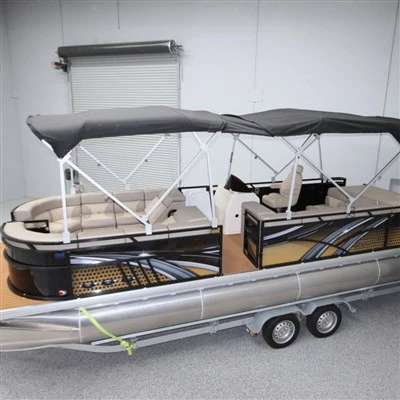
Last year, we got a call from a timber company in the Pacific Northwest that runs three large landing craft to haul logs from small, shallow inlets that regular cargo ships can’t reach. Their lead craft, the Ellie Mae, had hit a submerged rock at high tide, tearing a 4-foot gash in the starboard hull below the waterline. The company tried patching it with a generic fiberglass kit from a local hardware store, and by the time they called us, saltwater had already seeped into the core of the aluminum hull, weakening it and adding more than 2,000 pounds of water to the vessel’s displacement. That’s a disaster for a landing craft—extra weight means it draws more water, can’t get into those shallow inlets, and risks grounding again on the next run. When we towed it to our facility, we had to drain 1,800 gallons of saltwater before we even started repairs. That’s the kind of avoidable mistake that costs operators time, money, and even access to the places their business depends on.
So how do you actually repair a damaged landing craft the right way? It’s not just welding a patch over a hole. It’s a step-by-step process that accounts for the vessel’s original design, its load requirements, and the harsh conditions it’s going back into.
First, you have to assess the damage properly—and that means more than just looking at the visible hole. The Ellie Mae’s rock strike looked like a straightforward gash, but when we pressure-washed the hull and used an ultrasonic thickness gauge (the same tool we use for new construction quality checks), we found that the impact had also bent the internal transverse bulkheads 12 feet above the waterline. Those bulkheads are what keep the hull from twisting when the craft is fully loaded with logs or heavy equipment; bend them, and you create stress points that will split the hull open on the next grounding or rough crossing. We also had to test the surrounding area for saltwater corrosion, which can be hidden for months under paint or fiberglass. For landing craft—most of which are built with marine-grade aluminum or steel—corrosion is the silent damage that turns a small repair into a full rebuild if you miss it.
Once you’ve mapped all the damage, the next step is to make a repair plan that aligns with how the craft will be used. This isn’t a one-size-fits-all. A military landing craft that needs to operate in combat zones requires different repairs than a commercial landing craft that shuttles supplies to a Caribbean island. For the Ellie Mae, which makes two runs a day in choppy, saltwater-filled inlets, we decided not just to patch the hole, but to reinforce the entire starboard hull section. We cut out the damaged aluminum plate, which was 1/2-inch thick (standard for large utility landing craft), and measured a new plate to match the exact contour of the original hull. Generic steel or aluminum won’t cut here—you have to use the same grade of metal the craft was built with, because different grades have different tensile strength and corrosion resistance. We also replaced the bent bulkheads, not just straightening them, because straightened metal is never as strong as new, and will warp again under load.
For small landing craft—think the utility LCVPs that parks departments or search and rescue teams use—damage is often different: scrapes on the hull from ramps, minor cracks in the transom from outboard motor vibration. A common mistake here is over-repairing; you don’t need a full hull replacement for a 6-inch scrape on a fiberglass hull. But you do need to do it right. For fiberglass, you have to grind out the damaged layer all the way to the solid core, not just cover it with a layer of new fiberglass. If you leave even a thin layer of damaged fiberglass under the new patch, water will seep in and rot the core from the inside out. We’ve seen small landing craft that were put back in service after a cheap patch, only to sink a year later when the core collapsed mid-crossing. That’s not just a repair failure—it’s a safety failure.
Once the structural repairs are done, the next critical step is the sealant and corrosion protection. This is where a lot of yards cut corners. Landing craft spend 80% of their time in saltwater or brackish water, so any gap between a new plate and the old hull has to be sealed with a marine-grade, corrosion-resistant sealant that can handle constant moisture and temperature changes. For aluminum hulls, we use a galvanic isolation sealant between new aluminum plates and the old hull to prevent electrolysis—two different types of aluminum will react in saltwater, causing holes to form in as little as six months if you don’t isolate them. For steel hulls, we apply a special anti-corrosion epoxy paint that’s three times thicker than standard boat paint, because landing craft hulls scrape against ramps, rocks, and docks all the time. We also add a sacrificial anode system—zinc blocks attached to the hull—that acts as a buffer against saltwater corrosion, even in areas where the paint gets scratched. This is a step we include in every repair, regardless of the craft size, because it’s the difference between a repair that lasts two years and one that lasts 10.
After the structural and finishing work comes a test that’s specific to landing craft: a load and sea trial. Regular boats are tested with a small load, but landing craft are tested at their maximum rated load, because the repair has to hold when the craft is at its heaviest. For the Ellie Mae, we loaded it with 80,000 pounds of lumber—its maximum rated capacity—and took it out in 3-foot swells, the exact conditions it encounters on its runs. We checked the hull for any new stress cracks, tested the bilge pumps (critical for any craft that operates below the waterline), and verified the draft to make sure it still could access the shallow inlets it needed. A sea trial without a full load is useless; a landing craft that’s 2 inches too deep in the water can’t reach the job sites it was built for.
I’ve heard some operators say, “It’s cheaper to replace the craft than repair it.” For small, 10-year-old utility landing craft, that might be true, but for larger, commercial or military landing craft that cost six figures (or more) when new, repair is almost always the better option. Not only is it cheaper—we recently did a full repair on a 50-foot utility landing craft for 30% of the cost of a new one—it also saves you the time of waiting for a custom-built new craft, and you keep the local knowledge of the existing vessel. Our team works on so many landing craft that we know each vessel’s quirks: where the bulkheads are slightly thinner, where the anodes corrode faster, which areas are more likely to hit rocks. We factor that into every repair, which is why our clients come back year after year.
But here’s the thing: the best repair is no repair at all. We also work with our clients on preventive maintenance, because most landing craft damage is avoidable. Simple things like regular inspections of the hull for scratches or dents, cleaning the hull to remove barnacles that add extra weight (and make the craft draw more water), and checking the anodes every six months can prevent the kind of major damage we saw on the Ellie Mae. Last year, we did a free inspection for a seafood company in the Gulf Coast, and we found a 1-inch crack in the transom of one of their landing craft. A $200 repair stopped us from fixing a $50,000 problem later. It’s a small step, but it makes a huge difference.
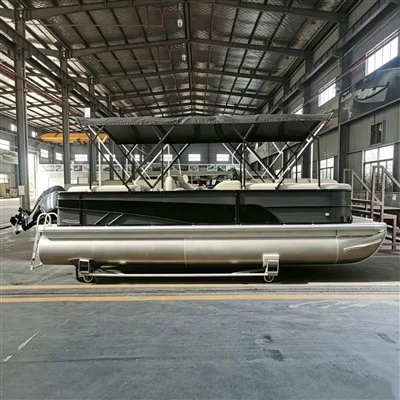
If your landing craft has taken a hit—whether it’s a small scratch from a ramp or major damage from a grounding—don’t trust just any boat yard. A landing craft is a specialized vessel, built for work, not leisure. It needs repairs that match its original design, its load requirements, and the harsh conditions it operates in. We’ve spent decades perfecting this process, and we can help you get your craft back to work quickly, safely, and with repairs that will last for years. If you’re ready to discuss your landing craft repair needs, we’re here to talk through every step, answer your questions, and give you a clear plan to get back on the water.
Trawlers References
- Marine Board, National Research Council. (2007). Amphibious Craft and Lighterage: Requirements for the Future. National Academies Press.
- American Bureau of Shipping. (2021). Rules for Building and Classing Small Commercial Vessels, 2021. American Bureau of Shipping.
- International Organization for Standardization. (2019). ISO 12215-5: Small Craft – Hull Construction and Scantlings – Part 5: Materials and Strength Requirements. International Organization for Standardization.
- Aluminum Association. (2018). Marine Aluminum Design Manual, 2018. Aluminum Association.
- U.S. Coast Guard. (2022). Small Vessel Safety Inspection Manual: Commercial Workboats and Landing Craft. U.S. Government Publishing Office.
Longkou Jinda Shipping Co., Ltd.
As one of the most professional landing craft manufacturers and suppliers in China, our products have good reputation in the market. Please feel free to buy premium landing craft for sale here from our factory. Welcome to contact us for customized service.
Address: North of Shuangyu Village, Xingjia Sub-district, Longkou City, Yantai City, Shandong Province
E-mail: leven@jindaship.com
WebSite: https://www.jinda-ship.com/
