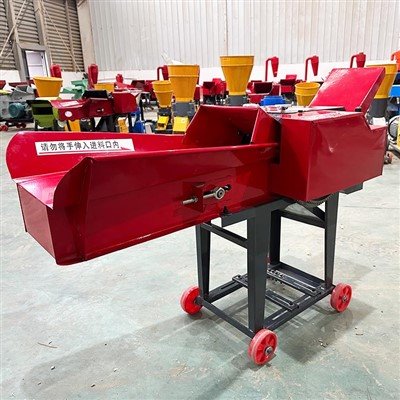
If you’ve ever stood in a small-scale farm, a livestock rearing shed, or even a home backyard setup, you’ll know how much time and effort goes into preparing roughage for animals—whether it’s hay, straw, or crop stalks. That’s where a chaff cutter comes in, a tool designed to cut forage into small, manageable pieces that are easier for cattle, goats, sheep, and even poultry to digest. But here’s the thing: not all chaff cutters are created equal, and their user-friendliness isn’t just a nice-to-have—it’s a make-or-break factor for anyone running a farm or a livestock operation, especially if you’re the one handling the machine day in and day out. As a supplier who’s been working with farmers for over a decade, I’ve seen firsthand how a chaff cutter’s user-friendliness doesn’t just save time; it reduces frustration, lowers the risk of injury, and makes a big difference in how consistent your animal feed turns out. Chaff Cutter

Let’s start with the basics: what does “user-friendliness” even mean for a chaff cutter? It’s not just about being easy to turn on. For someone who’s up at 5 a.m. preparing feed before the sun rises, a user-friendly chaff cutter should fit their workflow, not the other way around. I think a lot of people miss this—they see a chaff cutter as a piece of equipment, but to the farmer who uses it, it’s a tool that’s part of their daily routine. So let’s break down the key parts of user-friendliness that I hear about from my customers all the time.
First, portability and size. If you’re a small-scale farmer with a few acres, space is at a premium, and you don’t want a machine that’s too big to move from the shed to the feed preparation area, or too heavy to lift when you need to clean it. Years ago, we sold a model that was 150 kilograms to a guy who had a 10-cow operation in a rural village; he ended up leaving it in the shed because he could barely drag it outside on his own. Later, we adjusted our line to include compact, 50-kilogram models with sturdy wheels—suddenly, that same customer was moving it every morning, and he told me it cut his feed prep time by almost an hour. That’s user-friendliness in action: matching the machine’s size and weight to the user’s needs. For larger operations, portability still matters, but it’s more about being able to move the machine around the farm without needing a crane; our bigger commercial models have reinforced, non-marking wheels that work on uneven dirt paths, so you don’t have to worry about scraping concrete or getting stuck in mud.
Next, ease of operation. Let’s be honest: not everyone using a chaff cutter is a tech whiz. Many small-scale farmers have been using manual tools their whole lives, and they want a machine that doesn’t require a 20-page manual to figure out. The best chaff cutters we’ve tested have simple controls—just an on/off switch, a speed regulator, and a clear feed chute that’s easy to align with the stalks. We once got a call from a woman whose husband had passed away, and she was now running their 20-goat operation alone; she said her old chaff cutter had confusing controls, and she’d had to call her neighbor three times to figure out how to start it. When we supplied her with our entry-level model, which has one big lever for adjusting cut length, she texted me a photo a week later, smiling, with a note that she “got it running on the first try.” That’s the kind of feedback that tells us we’re getting user-friendliness right. Also, safety controls are a big part of operation ease—we’ve seen machines without a safety guard on the feed chute, which is a recipe for disaster. Our models all have interlock safety switches that cut power if the guard is open, so even if someone is in a hurry, they can’t make a dangerous mistake.
Then there’s maintenance. I’ve heard so many farmers say they avoid using certain chaff cutters because they’re a pain to clean. When you’re cutting wet straw or corn stalks, bits of forage get stuck in the blades, the chute, and the housing, and if you don’t clean it right away, it can rot or make the machine jam. A user-friendly chaff cutter should have parts that are easy to remove and clean, without needing special tools. A few years back, we introduced a model with a quick-release chute—you just push a button, and it slides right off, so you can scrub it with a hose in two minutes. Before that, customers would spend 15 minutes trying to pry the chute loose with a screwdriver, which meant they’d often skip cleaning it, leading to jams later. Blades are another part of maintenance; if you have to take the whole machine apart to sharpen or replace the blades, that’s a big turnoff. Our chaff cutters have tool-less blade access—you unscrew a couple of bolts by hand, slide the old blades out, and put new ones in. A farmer doesn’t have time to spend an hour on maintenance every week; if it takes five minutes, he’s going to do it, and that keeps the machine running smoothly.
Adjustability is another key piece of user-friendliness. Not all animals eat the same feed—calves might need shorter cut lengths, while adult cows do better with slightly longer pieces, and goats prefer even smaller cuts. If a chaff cutter only does one cut length, that’s a problem, especially if you’re feeding different types of animals. Our models have a simple adjuster knob that lets you change the cut length from 1 to 5 centimeters in seconds, no tools needed. I remember a dairy farmer who used to buy three different chaff cutters for his 50-cow operation—one for his milking cows, one for his dry cows, and one for his young calves. When he switched to our adjustable model, he said he saved over $2,000 in equipment costs and cut down on the time he spent switching between machines. That’s the value of a user-friendly feature that adapts to your needs, instead of forcing you to adapt to the machine.
Now, let’s talk about something that’s less obvious but super important: noise and dust. I’ve seen farmers cover their ears when a chaff cutter is running, or wear makeshift dust masks because the machine blows so much fine straw into the air. Long-term exposure to loud noise can damage hearing, and fine dust can cause respiratory issues—both are big concerns for people who use these machines daily. Our chaff cutters are designed with noise-dampening housing, which cuts down operational noise by almost 30% compared to standard models; customers tell us they can talk to someone next to them while the machine is running, which is a huge improvement. We also add a dust collection port on the side, so you can attach a small bag to catch the fine particles, instead of them going everywhere. A lot of suppliers don’t think about this, but for the farmer who’s running the machine for hours at a time, less noise and less dust mean a safer, more comfortable workspace—and that’s exactly what user-friendliness is about.
Of course, user-friendliness isn’t one-size-fits-all. A small, backyard setup with 5 goats has very different needs than a commercial farm with 200 cattle. That’s why we offer a range of chaff cutters, each tailored to different user groups. Our manual chaff cutters, for example, are perfect for the smallest operations—they don’t need electricity, so you can use them even if you’re off the grid, and they’re lightweight enough for one person to turn. For medium-sized farms, we have electric models with motorized feeding, so you don’t have to push the stalks into the chute by hand; that’s a big help for people with wrist or arm issues, which are common from manual labor. For large commercial operations, our heavy-duty models have a high-capacity hopper that can hold up to 50 kilograms of stalks, so you don’t have to stop and reload every few minutes. That kind of customization is key—user-friendliness means giving the person what they need, not just selling them a machine because it’s cheap.
I’ve also learned a lot from customers who had bad experiences with other brands. Last year, a farmer came to us who’d bought a chaff cutter from another supplier that broke down after two weeks. He said the blades were hard to replace, the chute jammed every time he used it, and the customer service was non-existent. When we sold him a replacement, we walked him through every step—how to set the cut length, how to clean it, how to troubleshoot small issues. A month later, he sent us a video of him using it, saying it was the easiest machine he’d ever owned, and he’d already told three of his neighbors to check us out. That’s the thing about user-friendliness—it’s not just the machine itself; it’s the support that comes with it. A supplier who takes the time to teach you how to use the machine correctly, who is there when you have questions, makes the whole experience way better.
I want to be clear: a chaff cutter’s user-friendliness doesn’t mean it’s “too simple” to do the job. It means it’s efficient, safe, and works with your schedule. Too often, people think that a more powerful machine has to be complicated, but we’ve found that you can have both power and ease of use. Our electric models, for example, have a 2-horsepower motor that can handle thick corn stalks and hay, but the controls are just as simple as our manual models. We don’t believe in adding unnecessary features that make the machine harder to use—if a feature doesn’t save time, reduce risk, or improve the quality of the feed, we don’t include it.
If you’re in the market for a chaff cutter, here’s what I’d suggest: don’t just look at the price. Think about who will be using it—are they strong enough to move it? Do they know how to use complex controls? How many animals do you have, and what types of feed will you be cutting? A user-friendly chaff cutter should make your life easier, not add another stress to your day. As someone who’s been in this industry for years, I’ve seen that the best machines are the ones that become a part of your routine, not a chore you have to fight with.
At the end of the day, a chaff cutter’s user-friendliness is about respect—respect for the farmer who uses it, who spends long hours caring for their animals, who needs a tool that works as hard as they do. It’s about building something that fits their life, not the other way around. If you’re ready to find a chaff cutter that’s easy to use, reliable, and tailored to your needs, we’re here to help. Reach out to us to discuss your requirements, and we’ll walk you through our range to find the perfect fit for your operation.
Biomass Pellet Mill References
- FAO. (2020). Small-Scale Livestock Feed Preparation: Tools and Practices. Food and Agriculture Organization of the United Nations.
- Singh, R., & Kumar, A. (2019). Ergonomic Design Considerations for Agricultural Equipment: A Review. Journal of Agricultural Engineering, 56(2), 112-120.
- Rural Industries Research and Development Corporation. (2021). User-Centric Design for Small Farm Machinery. RIRDC Publication No. 21/045.
- World Bank. (2020). Empowering Smallholder Farmers: The Role of Simple, User-Friendly Agricultural Tools. Washington, D.C.: World Bank Group.
- International Labour Organization. (2018). Safety in Agricultural Machinery Use: Guidance for Small-Scale Operators. ILO Guidelines on Occupational Safety and Health in Agriculture.
Zhengzhou Xinyihaotong Machinery Manufacturing Co., Ltd.
As one of the most professional chaff cutter manufacturers in China, we also support custom service. We warmly welcome you to buy high quality chaff cutter for sale here from our factory. For price consultation, contact us.
Address: Rooms 2301–2312, Jiayi Building, Xinxiang City, Henan Province, China
E-mail: zhaoyixuan5566@gmail.com
WebSite: https://www.xyhtmachinery.com/
